Off-Page SEO focuses on building authority, credibility, and trust through external signals such as backlinks, brand mentions, digital PR, and social amplification. In the AI era, success is increasingly measured by citations and visibility within AI-generated answers rather than clicks alone.
Core Off-Page SEO Factors
Why Links Still Matter
Backlinks act as third-party endorsements that distribute authority and help search engines understand topical relevance. While Google no longer exposes PageRank publicly, modern SEO tools (Ahrefs, Moz) still model link equity inspired by it.
Link Building Best Practices
- Earn editorial links through Digital PR
- Collaborate with journalists (HARO, QUOTED)
- Analyze competitor backlink profiles
- Use descriptive, varied anchor text
Avoid spammy directories, paid links, link farms, and over-optimized anchors. Google’s Penguin and SpamBrain systems detect and neutralize manipulative link patterns.
Linkless Mentions & AI SEO
Modern search engines and LLMs evaluate brand authority using entity mentions without links. Mentions across media, forums, reviews, podcasts, and social platforms contribute to Share of Voice in AI-generated results.
E-E-A-T and Off-Page Signals
Off-page SEO directly reinforces EEAT:
- Experience: user reviews, real-world usage
- Expertise: recognition by peers and publications
- Authoritativeness: backlinks, citations, media mentions
- Trustworthiness: reputation, reviews, secure platforms
Social Media, SMO & SMM
Social platforms amplify content reach and indirectly support SEO. While most social links are nofollow, platforms like Reddit and YouTube generate user-generated content frequently cited by AI systems.
Future of Off-Page SEO
Off-page strategies are evolving beyond websites into AI ecosystems. Visibility in LLMs, citations, and brand mentions across multiple platforms will define SEO success in the coming years.
Off-Page SEO Summary
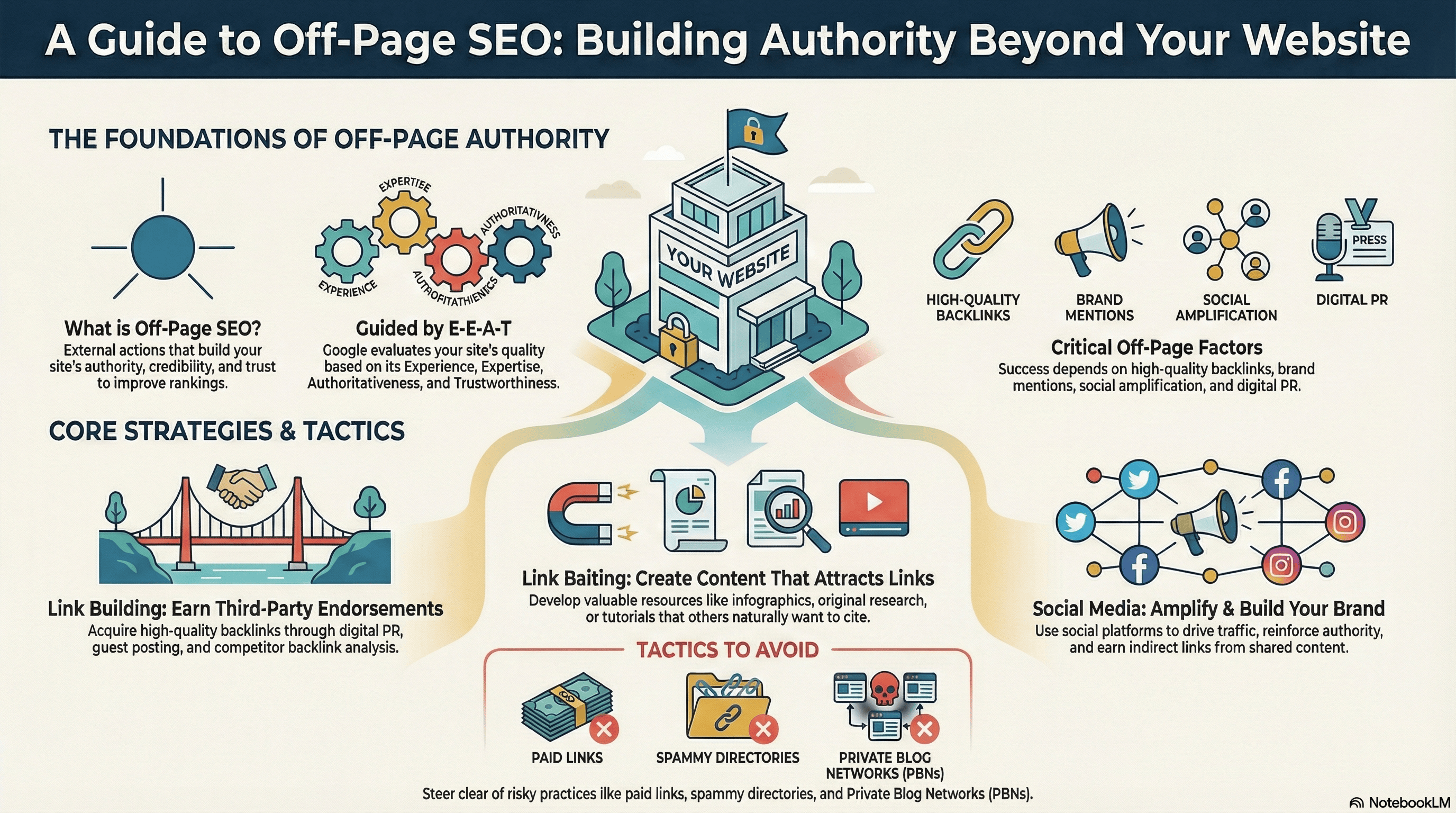
Visual summary of modern Off-Page SEO factors:
Watch the video for a complete guide to Off-Page SEO: